

When Should Children Have Their First Eye Exam?

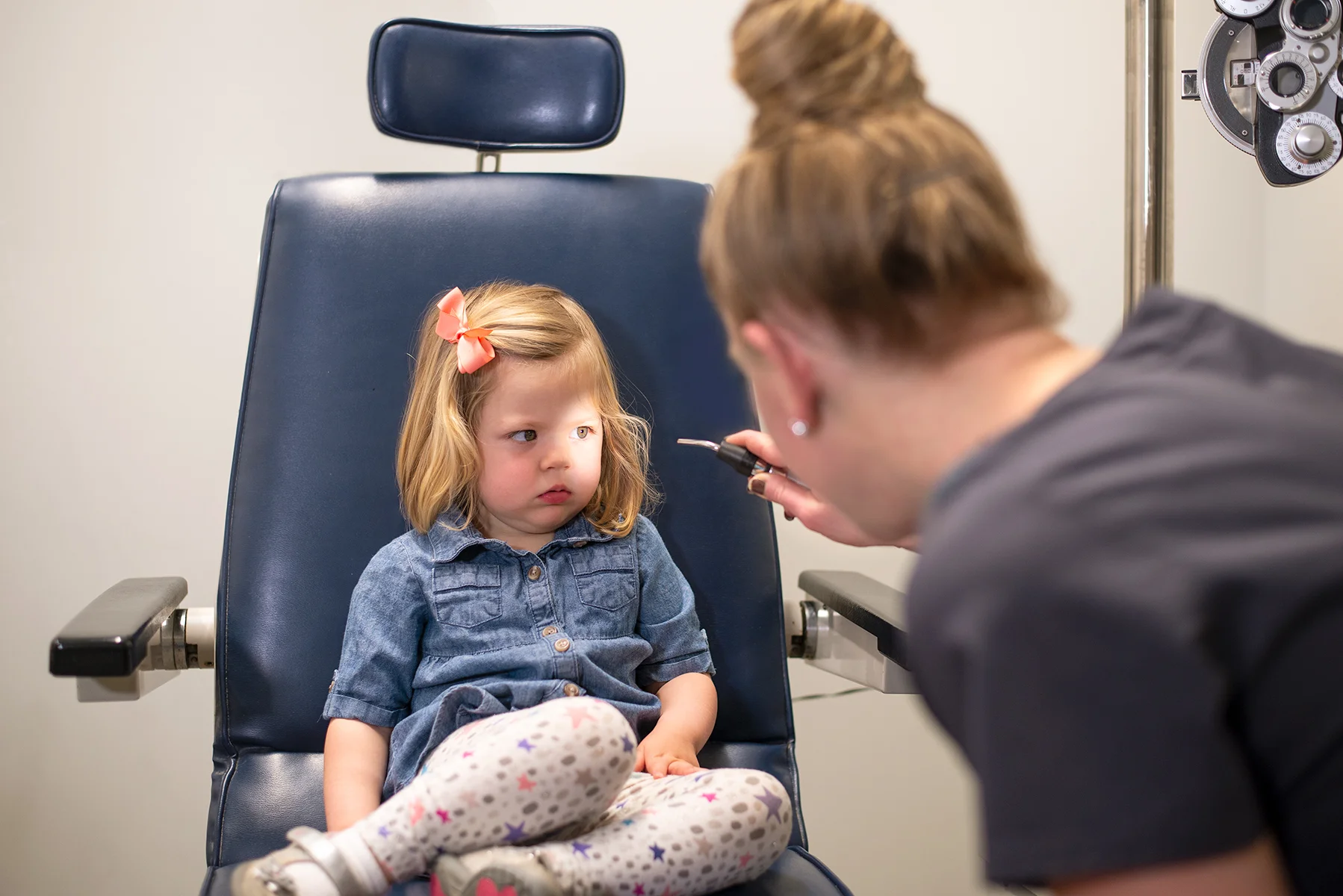
As a parent, you want to give your child every advantage for healthy development and success in school. While most parents are diligent about well-child checkups and vaccinations, many often wonder when their child should go to the eye doctor for the first time. It’s a question we hear often at Jervey Eye Group: When should kids first go to the eye doctor, and what should I expect?
Your child’s first eye exam may need to happen much earlier than you think. Vision plays a critical role in how children learn, develop motor skills, and interact with the world around them. That’s why understanding established guidelines for referral to a pediatric ophthalmologist is so critical.
Why Early Eye Exams Matter for Your Child’s Development
Children aren’t born with fully developed vision. Their visual system continues to mature throughout infancy and early childhood, making these early years critical for detecting and treating eye problems. In fact, approximately 80% of learning in a child’s first 12 years comes through their eyes.
When vision problems go undetected, they can affect far more than just your child’s ability to see clearly. Undiagnosed eye conditions can lead to:
- Developmental delays
- Difficulty with hand-eye coordination
- Behavioral issues
- Struggles in school
A child who can’t see the board at school clearly or has trouble with depth perception may seem inattentive or uninterested in learning when the real issue is vision related.
The good news is that many childhood eye conditions are highly treatable when caught early. Conditions like lazy eye (amblyopia) and crossed eyes (strabismus) respond best to treatment during the critical developmental window in early childhood (usually in the first 8–9 years of life). A comprehensive eye exam with a pediatric eye doctor can identify these issues before they impact your child’s quality of life and learning ability.
Recommended Schedule for Child Vision Screenings
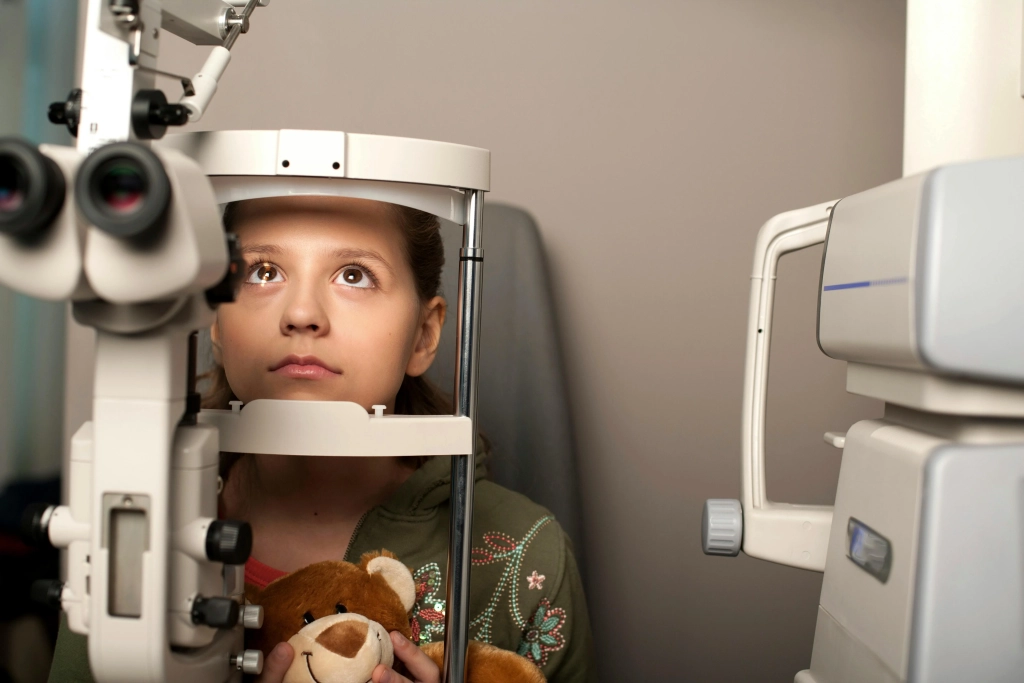
The American Academy of Ophthalmology (AAO) and the American Association for Pediatric Ophthalmology and Adult Strabismus (AAPOS) recommended schedule for children’s eye appointments starts with an initial vision “screening” for eye problems and then a referral to a pediatric eye doctor for a comprehensive eye exam, if needed. Your child’s vision can be screened by a pediatrician, family physician, ophthalmologist, optometrist, or other properly trained health care provider. Screenings are also commonly offered at schools, community health centers, or community events.
Newborn
Your newborn’s eyes should be examined to check for basic signs of eye health:
- A “red reflex” – if a bright light is shone in each eye and this does not return a reflex, more testing may be needed
- Pupil response
- Blinking to light
Your newborn should have their first comprehensive eye exam with a pediatric eye doctor if the baby is born prematurely, has signs of eye disease, or has a family history of childhood disease. In addition, infants who do not track well after age 3 months should be referred.
During this first visit, the pediatric eye doctor will assess several key areas of your baby’s visual development. We check eye alignment to ensure both eyes are working together properly, evaluate how well your baby can focus and follow objects, examine the overall health of the eye structures, and look for signs of any eye disease or congenital conditions.
The exam is gentle, quick, and doesn’t require your baby to read letters or identify pictures. Pediatric eye doctors use specialized techniques designed specifically for infants, making the experience comfortable for both baby and parents.
6 to 12 months
A second screening is done during the child’s first year of life, usually between the 6 and 12-month well-child exam. Your child’s pediatrician or health care professional will examine the above-mentioned tests, as well as check to see that the eyes move normally and are properly aligned.
12 to 36 months
Children 12 to 36 months should be referred to a pediatric eye doctor when there is strabismus, chronic tearing or discharge, or they fail their photoscreening.
36 months to 5 years
During this age range, your child’s vision and eye alignment should be checked. Visual acuity can also be tested as soon as a child is old enough to read the eye chart. If a child struggles with the eye chart, a photoscreener may be used to instead. A pediatric eye doctor should see your child if the screening shows signs of:
- Misaligned eyes (strabismus)
- “Lazy eye” (amblyopia)
- Refractive errors (myopia, hyperopia, astigmatism, anisometropia)
- Other focusing problems
Getting referred for treatment for these problems should then occur as soon as reasonably possible.
5 years and older
Children should be screened for visual acuity and alignment by or before 5 years of age. Children presenting with strabismus, visual acuity worse than 20/32 in either eye, or not reading at grade level should also be referred to a pediatric eye doctor. Glasses can be prescribed to address common concerns like myopia.
School-Age Children: Regular Checkups
Vision can change as children grow. Therefore, even if they previously passed all vision screenings, it is important to mention any concerns to your child’s pediatrician. Once children are in grade school, they may also be able to see a general optometrist, if needed, rather than specifically waiting to see the pediatric eye specialist (pediatric ophthalmologist). A consultation with the specialist can be made by the child’s optometrist, if needed.

Recommended Schedule for Your Child’s Vision Exams
While the recommended timeline above is a good framework, some children need to see a pediatric eye doctor sooner. Watch for these warning signs at any age.
Infant and Toddler
- Eyes that don’t move together or appear crossed
- A white pupil or unusual reflection in photos
- Excessive tearing or eye drainage
- Sensitivity to light
- One eye that turns in, out, up, or down
- Eyes that appear cloudy
Preschool and School-Age
- Frequent eye rubbing
- Squinting or closing one eye to see
- Sitting too close to the TV or holding books very close
- Losing their place while reading or using a finger to track
- Complaining of headaches or tired eyes
- Avoiding activities that require near vision (like coloring) or distance vision (like playing ball)
- Tilting their head to see better
- Poor hand-eye coordination
- Declining grades or difficulty at school
Family History Considerations
If there’s a family history of childhood eye conditions, lazy eye, crossed eyes, high prescription lenses, or eye disease, let your child’s eye doctor know. Some conditions have a genetic component, and children with a family history may benefit from earlier or more frequent monitoring.
What to Expect During Your Child’s First Eye Exam
Many parents worry that their child won’t cooperate during an eye exam, but pediatric eye doctors are experts at examining children of all ages. We use age-appropriate techniques and move quickly to keep even young children engaged.
- For infants, much of the exam involves observing how your baby responds to light, follows objects, and how their eyes align. We use special instruments that can assess vision and eye health without requiring any response from your baby.
- For toddlers and preschoolers, we use pictures, shapes, or the “tumbling E” chart instead of letters. Many of the tests feel like games to young children. We keep the exam brief and adjust our approach based on your child’s attention span and comfort level.
- For school-age children, the exam becomes more similar to an adult eye exam but remains focused on the unique vision needs of growing children.
To prepare your child and make the visit go smoothly:
- Talk positively about the eye doctor in advance.
- Explain that the doctor will look at their eyes and play some games to make sure everything is working well.
- Mention that sometimes, special “magical” or “superhero” (dilating) eyedrops may be used.
- Know that sometimes a visit may take 1.5–2 hours to fully assess your child’s eyes. Please plan accordingly and schedule the appointment when your child is typically well-rested and most cooperative.
- Bring comfort items and/or snacks for younger children if needed.
- Arrive with any relevant information about family eye health history, pregnancy and birth history, and any concerns you’ve noticed.

Common Childhood Eye Conditions We Screen For
During a comprehensive pediatric eye exam, we screen for a range of conditions that can affect your child’s vision and eye health.
- Lazy Eye (Amblyopia): A condition where one eye has reduced vision because it’s not working properly with the brain. If caught early, usually before age 7, amblyopia can often be successfully treated with patching, special glasses, or eye drops. Left untreated, it can result in permanent vision loss in the affected eye.
- Crossed Eyes (Strabismus): A misalignment of the eyes where they don’t look in the same direction at the same time. This isn’t just a cosmetic issue – strabismus can lead to amblyopia and problems with depth perception. Treatment may include glasses, patching, or surgery, depending on the type and severity.
- Refractive Errors: Nearsightedness (difficulty seeing far away), farsightedness (difficulty seeing up close), and astigmatism (blurred vision at all distances) are common in children. While many kids are slightly farsighted when young, significant refractive errors can interfere with learning and development. Glasses can make a dramatic difference in a child’s ability to function and learn.
- Eye Alignment Issues: Problems with how the eyes work together as a team can affect depth perception, reading ability, and cause eye strain or headaches. These issues may not be obvious to parents, but they can significantly impact school performance.
- Other Eye Conditions and Eye Disease: Comprehensive exams also screen for less common but serious conditions, including congenital cataracts, glaucoma, retinal problems, infections, and structural abnormalities. Early detection of these conditions is essential for preserving vision and eye health.
Schedule Your Child’s Eye Exam Today
If your child is in need of their first eye exam or it’s been more than a year since their last visit, we invite you to schedule an appointment with Jervey Eye Group. Call us at 864.458.3900 or visit our website to schedule your appointment today.
Recent blogs
How Diabetes Can Affect the Eyes
Read More

How Eye Doctors Diagnose Cataracts
Read More

Light Adjustable Lenses and Their Use in Cataract Surgery
Read More