

How Eye Doctors Diagnose Cataracts


Many people assume they’ll know when they have cataracts. They picture a dramatic decline in vision that will be impossible to miss.
The reality is quite different; cataracts typically develop so gradually that many patients don’t realize they have them until a routine eye exam reveals the truth.
This is why proactive cataract screening is so important. By the time you notice significant vision problems, cataracts may have already progressed considerably. Early detection through regular comprehensive eye exams gives you more cataract treatment options, better outcomes, and the ability to plan ahead for any necessary procedures.
If you’ve been wondering how to test for cataracts or what a cataract examination involves, read on. Understanding the diagnostic process can help you take a proactive approach to protecting your best vision.
Understanding Cataracts and Why Early Detection Matters
A cataract is a clouding of your eye’s natural lens, which sits behind the iris and pupil. Think of it like a window that gradually becomes fogged – light can’t pass through as clearly, resulting in blurred or dimmed vision.
Cataracts are most commonly associated with aging. In fact, by age 80, more than half of Americans either have cataracts or have had cataract surgery. However, cataracts can also develop due to injury, certain medications, medical conditions like diabetes, or even be present at birth.
The gradual nature of cataract development is precisely why early detection matters. When diagnosed early, you and your eye doctor can monitor changes over time, update your glasses or contact lens prescription to maintain functional vision, and plan for cataract surgery at the optimal time: before the cloudy lens significantly impacts your daily activities.
Early diagnosis also allows us to identify the specific type of cataract you have, helping us predict how it will progress and which treatment approach will work best for you.
When Should You Be Screened for Cataracts?
The question isn’t whether you should be screened for cataracts, but how often. Regular eye exams are your best defense against vision-threatening conditions, including cataracts.
Age-Based Screening Guidelines
The American Academy of Ophthalmology recommends the following schedule for comprehensive eye exams that include cataract screening:
- Adults ages 40–54 should have a baseline eye examination and then follow-up exams every two to four years, depending on individual risk factors. Age 40 is when early signs of eye disease and vision changes often begin to appear, making this an important time to establish a baseline.
- Adults ages 55–64 should increase the frequency to every one to three years. This is when cataracts and other age-related eye conditions become more common.
- Adults age 65 and older should have annual comprehensive eye exams. At this stage of life, the risk of cataracts and other eye diseases increases significantly, making yearly monitoring essential.
Risk Factors That May Require More Frequent Screening for Cataracts
Some individuals should be screened more frequently than these general guidelines suggest. If you have any of the following risk factors, talk to your eye doctor about a personalized screening schedule:
- Diabetes significantly increases cataract risk and can cause cataracts to develop earlier and progress faster
- A family history of cataracts may mean you’re genetically predisposed to developing them
- Previous eye injuries or surgeries can lead to traumatic cataracts
- Long-term use of corticosteroid medications is a known risk factor for cataract development
- Excessive sun exposure without UV protection can accelerate cataract formation
- Smoking doubles your risk of developing cataracts
- Other factors include high blood pressure, obesity, and previous radiation treatment
If any of these apply to you, don’t wait for cataract symptoms to appear. Proactive screening is your best tool for protecting your vision.
Early Warning Signs of Cataracts
While regular eye exams can catch cataracts before they cause noticeable symptoms, it’s important to recognize the warning signs that should prompt you to schedule an appointment. These include:
- Blurry or cloudy vision. This is often the first symptom people notice, though it typically develops so gradually that it’s easy to dismiss.
- Difficulty with night driving. This is a common complaint – headlights may seem too bright, and you may notice increased glare or halos around lights.
- Colors appear faded, yellowed, or less vibrant than they once did.
- Needing frequent changes to your glasses or contact lens prescription; this can be an early indicator of cataracts.
- Experiencing double vision in one eye.
- Needing brighter light for reading or other close-up tasks.
These symptoms can indicate cataracts, but they can also signal other eye conditions. That’s why a comprehensive eye examination for cataract diagnosis is essential – your eye doctor can determine the true cause of your vision problems and recommend appropriate treatment.

The Cataract Diagnostic Process: What to Expect
Diagnosing cataracts involves several tests that work together to give your eye doctor a complete picture of your eye health. Here’s what happens during a comprehensive eye exam focused on cataract evaluation.
Visual Acuity and Dilated Eye Exam
Your examination begins with a visual acuity test, where you’ll read letters on a chart at various distances. This establishes how well you can see and provides a baseline for tracking any changes over time. Your eye doctor will also ask about your symptoms and how your vision affects your daily activities – things like driving, reading, or working on a computer.
In addition, the dilated eye exam is crucial for cataract diagnosis. Your eye doctor will use special drops to dilate (widen) your pupils, which typically takes 15–20 minutes. Dilation allows a clear view of your natural lens and the structures at the back of your eye.
During this exam, your doctor can see if the lens has become cloudy and assess the extent and location of any cataracts. Dilation also enables screening for other eye diseases, like:
- Glaucoma
- Macular degeneration
- Retinal problems that can cause similar symptoms
Plan to bring sunglasses to your appointment, as your eyes will be light-sensitive for a few hours after dilation. You may also experience blurred vision temporarily, so consider arranging transportation if you’re concerned about driving.
Slit Lamp Examination
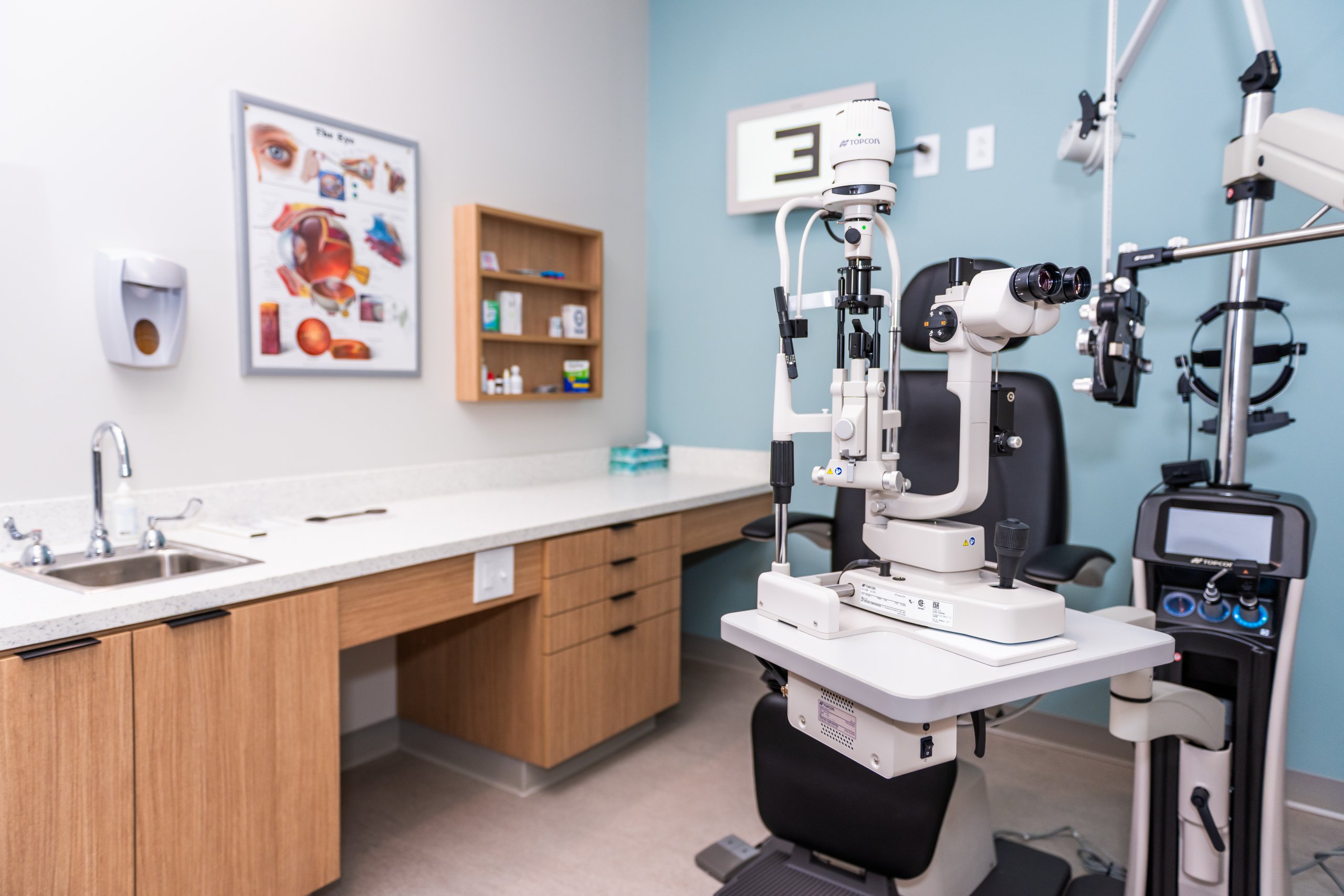
The slit lamp is one of the most important tools for diagnosing cataracts. This specialized microscope allows your eye doctor to examine the structures of your eye in fine detail under high magnification.
During a slit lamp examination, you’ll place your chin and forehead against supports while your doctor shines a thin beam of bright light into your eye. The slit lamp provides a three-dimensional view of your eye’s front structures, including the cornea, iris, and especially the lens.
This examination reveals exactly where the cataract is located within the lens, how dense the clouding has become, and what type of cataract you have. These details are essential for determining how the cataract will likely progress and when treatment might be necessary.
Additional Diagnostic Tests
Beyond the core examination, your eye doctor may perform additional tests to get a complete picture of your vision and eye health:
- A thorough retinal examination ensures that cataracts are indeed the cause of your vision problems and that other conditions aren’t contributing to your symptoms.
- Contrast sensitivity testing measures your ability to distinguish between shades of gray – cataracts often reduce contrast sensitivity before they significantly affect standard visual acuity.
- Glare testing assesses how much bright lights affect your vision, which is particularly important if you’re experiencing difficulty with night driving.
In some cases, your doctor may use advanced imaging technology like optical coherence tomography (OCT) to get detailed cross-sectional images of your eye structures. If cataract surgery is being considered, additional measurements will be taken to determine the appropriate power for your artificial lens implant.
What Happens After a Cataract Diagnosis?
Receiving a cataract diagnosis doesn’t mean you need surgery immediately. In fact, many people live with cataracts for years before they require treatment. The key is regular monitoring to track how the cataracts are progressing.
Your eye doctor will recommend a follow-up schedule based on the severity of your cataracts and how much they’re affecting your vision. For early-stage cataracts, you might continue with annual exams. If cataracts are progressing more quickly, more frequent visits may be needed.
In the meantime, there are ways to manage cataract symptoms and maintain your quality of life, such as:
- Updated glasses or contact lens prescriptions can often improve vision in the early stages of cataract development.
- Using brighter lighting for reading and close-up work can help compensate for reduced light transmission through the cloudy lens.
- Anti-glare coatings on eyeglasses can reduce problems with night driving.
- Wearing sunglasses with UV protection may help slow cataract progression.
The decision to proceed with cataract surgery is ultimately yours, guided by your eye doctor’s recommendations. Generally, surgery becomes appropriate when cataracts interfere with your daily activities despite these management strategies. This might mean difficulty driving safely, trouble reading or watching television, problems at work, or simply not being able to enjoy hobbies you love.
The good news is that cataract surgery is one of the most common and successful procedures performed today. The diagnostic information gathered during your examinations guides every aspect of the surgical process, from choosing the right artificial lens to planning the surgical technique.
At Jervey Eye Group, we perform over 3,000 successful procedures each year, and our comprehensive diagnostic approach ensures the best possible outcomes for our patients.
Should I Continue Having Annual Eye Exams After Cataract Surgery?
Yes – screening for other diseases of the eye remains important for maintaining your eye health.
After cataract surgery, your natural cloudy lens has been replaced with a clear artificial lens that won’t develop cataracts again. However, several important reasons make continued eye care crucial.
- First, a condition called posterior capsule opacification can develop months or even years after cataract surgery. Sometimes called a “secondary cataract,” this occurs when the membrane that holds your artificial lens becomes cloudy. It causes symptoms similar to the original cataract – blurred vision, glare, and difficulty seeing. This condition is easily treated with a quick laser procedure.
- Second, cataract surgery doesn’t prevent other age-related eye diseases from developing. Your eyes still need to be monitored for conditions like glaucoma, macular degeneration, and diabetic retinopathy. These conditions can develop or progress after cataract surgery and require early detection for the best outcomes.
Most patients should continue with annual comprehensive eye exams after cataract surgery. Your eye doctor may recommend more frequent visits if you have other eye conditions or risk factors. Days after surgery, you’ll have several follow-up appointments to monitor healing, but long-term eye care means maintaining that yearly schedule just as you did before surgery.
Get Comprehensive Cataract Care at Jervey Eye Group
At Jervey Eye Group, we believe in the power of proactive eye care. Our approach to cataract diagnosis combines state-of-the-art diagnostic technology with the experience of our skilled ophthalmologists and optometrists: a combination that ensures accurate diagnoses and personalized care plans.
We use advanced diagnostic equipment, including high-resolution slit lamp biomicroscopes, ocular coherence tomography, and sophisticated measurement tools that help us detect cataracts early and monitor even subtle changes over time. Our team stays current with the latest advances in cataract diagnosis and treatment, ensuring you benefit from the most effective approaches available.
Whether you’re coming in for routine screening, experiencing symptoms that concern you, or are ready to discuss cataract surgery options, we’re here to guide you through every step of the process. With four convenient locations in Greenville, Simpsonville, and Easley, comprehensive cataract care is accessible right here in the Upstate.
Don’t wait for cataracts to impact your daily life – proactive screening and early detection give you the best possible outcomes. Call Jervey Eye Group at 864.458.3900 or schedule your appointment today online!
Recent blogs
How Diabetes Can Affect the Eyes
Read More

When Should Children Have Their First Eye Exam?
Read More

Light Adjustable Lenses and Their Use in Cataract Surgery
Read More